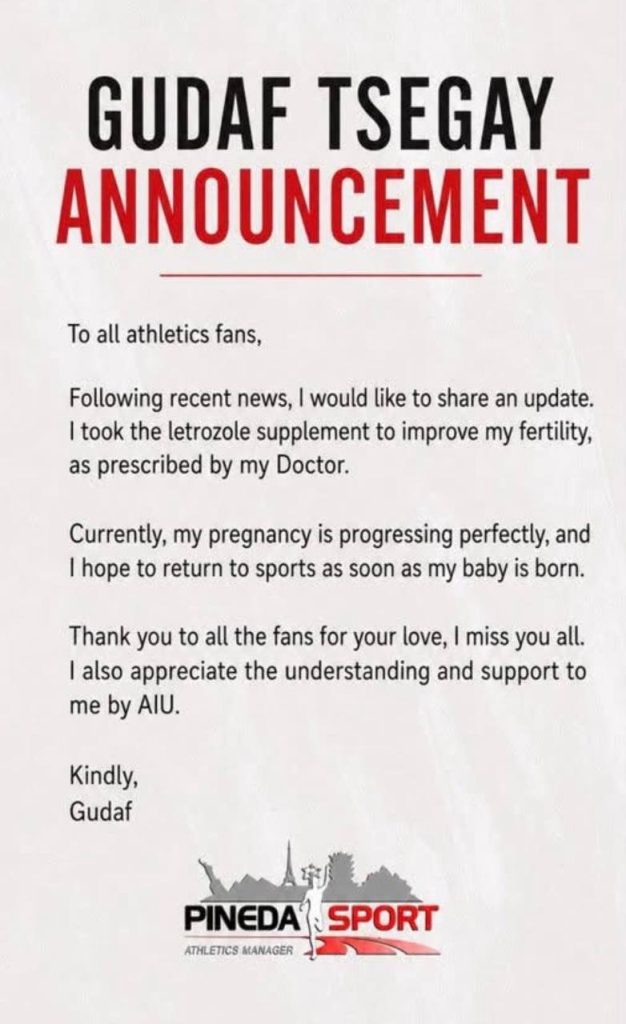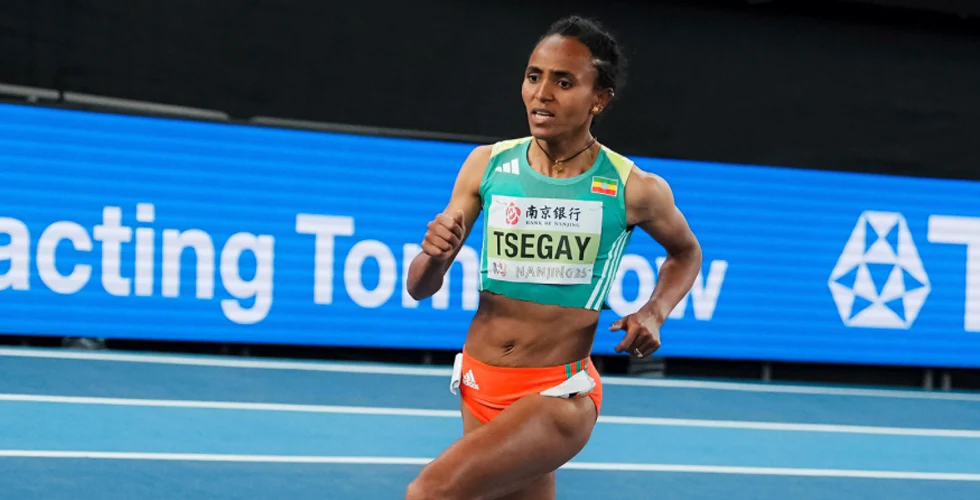
Decorated two-time former World champion and Olympic medallist, Gudaf Tsegay, has been banned for four months by the Athletics Integrity Unit (AIU) under a Case Resolution Agreement, after admitting to Anti-Doping Rule Violations (ADRVs) for the presence of a metabolite of Letrozole.
The 29-year-old Ethiopian was sanctioned under Rule 2.1 of the Anti-Doping Rules (ADR) relating to the Presence of a Prohibited Substance or its Metabolites or Markers in an Athlete’s Sample, and Rule 2.2 relating to Use or Attempted Use by an Athlete of a Prohibited Substance or a Prohibited Method.
Tsegay’s period of Ineligibility will run from 1 June, the date the athlete accepted the Case
Resolution Agreement – until 30 September 2026.
Following an out-of-competition test on 5 December last year, Tsegay returned a positive test for a metabolite of Letrozole – a Specified Prohibited Substance prohibited at all times under the WADA 2025 Prohibited List under the category of S4.1 Aromatase Inhibitors. She was subsequently notified of the potential ADRV by the AIU on 26 January 2026 and responded a
day later, explaining that she had been prescribed Letrozole to treat a diagnosed medical condition. She also produced supporting medical documents and evidence.
On 17 February 2026, Tsegay submitted a Therapeutic Use Exemption (TUE) application to the World Athletics Therapeutic Use Exemption Committee (WATUEC), which subsequently confirmed that the athlete’s treatment met the requirements of Article 4.2 of the World Anti-Doping Agency’s (WADA) International Standard for Therapeutic Use Exemptions (ISTUE).
Under Article 4.2, a TUE is granted if the athlete shows that the prohibited substance is needed to treat a diagnosed medical condition; there is no reasonable permitted therapeutic alternative. and the therapeutic use of the Prohibited Substance will not produce any additional performance enhancement beyond a return to a normal state of health following treatment.
While the conditions for a TUE under Article 4.2 were met, an application to WADA to exceptionally grant a retroactive TUE in this case under Article 4.3 ISTUE was rejected. Tsegay, therefore, entered a Case Resolution Agreement with the AIU and WADA, and a four-month ban was considered appropriate under Rule 10.6.1(a) ADR (No Significant Fault or Negligence). The
length of the sanction was based on Tsegay’s degree of Fault, her prompt admission of the ADRV, and the fact that she demonstrated that the presence of the metabolite of Letrozole in her sample met the criteria of Article 4.2, meaning she would have received a TUE if it had been requested in advance.
Statement from Gudaf Tsegay